Tina Klein · 27 September 2026
Patterns of Engagement in Niche E-commerce Platforms During Periods of Backend Optimization
Backend optimization on niche e-commerce platforms involves server upgrades, database indexing improvements, caching layer enhancements, and content delivery network adjustments that occur in scheduled windows throughout the year. Researchers tracking user behavior note that these periods produce measurable shifts in engagement metrics such as session length, repeat visit rates, and checkout completion sequences. Data from multiple platform analyses shows that visitors to specialty retail sites often maintain browsing activity even while system changes roll out in the background, yet the specific patterns vary by optimization type and platform size.
Observed Shifts in Session Duration and Navigation Depth
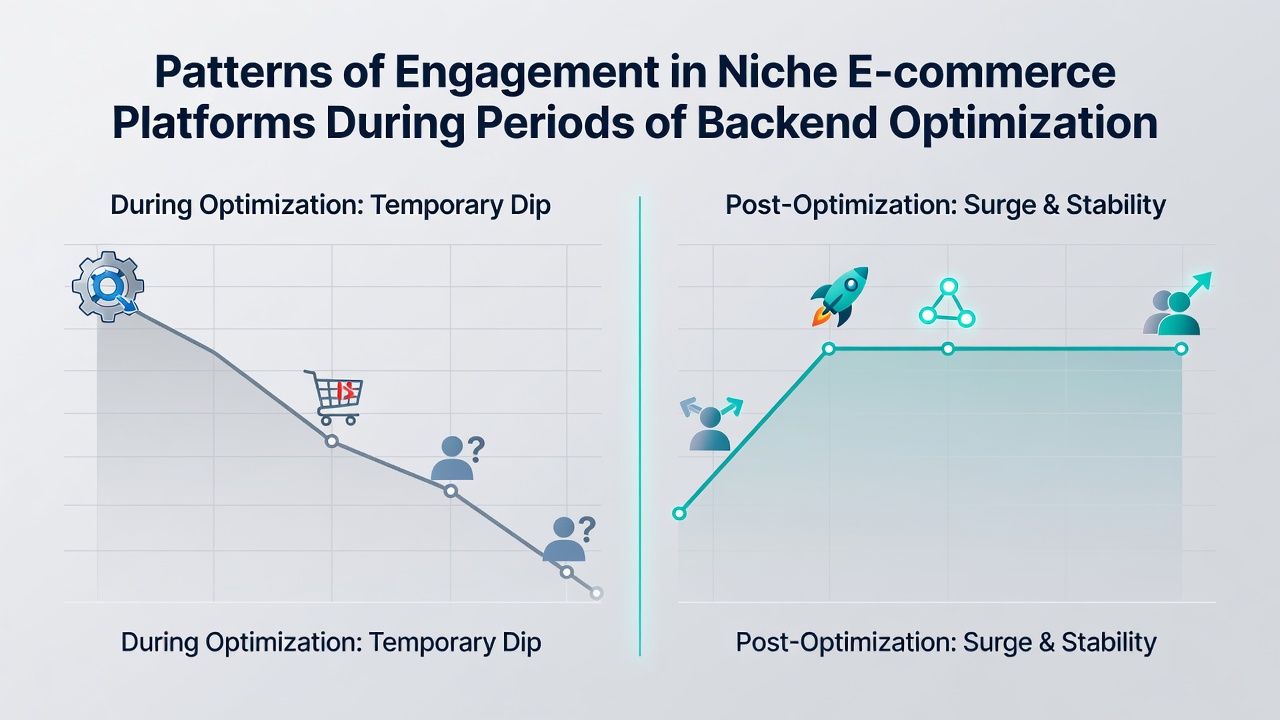
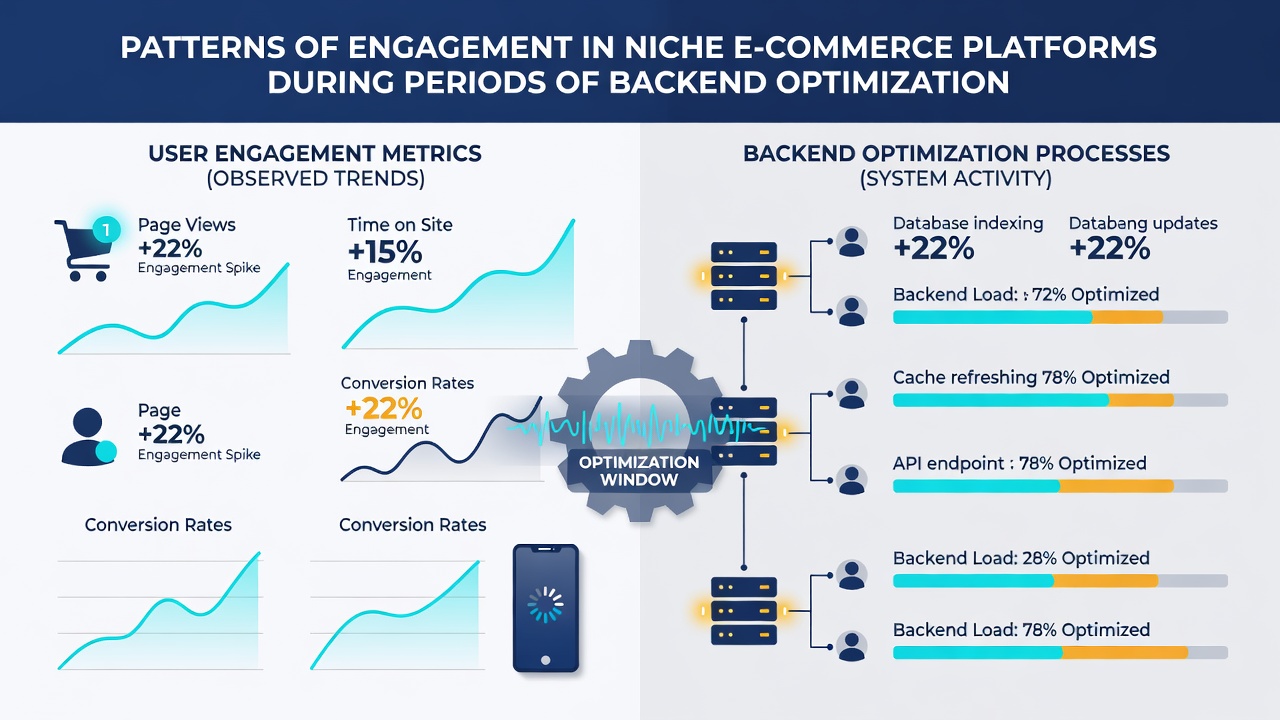
During backend optimization windows, session durations on niche platforms frequently extend by several minutes because reduced latency allows users to explore product categories without interruption. Studies conducted across European digital marketplaces indicate that average page views per session rise when query response times drop below two seconds, a threshold many specialty sites target during maintenance cycles. Observers note that customers searching for rare collectibles or technical components tend to open multiple product tabs and comparison tools once performance stabilizes, creating longer navigation paths that persist even after the optimization phase concludes.
Yet engagement does not increase uniformly. Platforms focused on hobbyist electronics report that users who encounter brief loading delays during early optimization stages often reduce their time on site by 15 to 20 percent before recovering in later stages. Figures released by the Australian Bureau of Statistics on online retail activity reveal that niche segments experience these temporary dips more sharply than general marketplaces because their audiences rely on detailed specification filters and real-time inventory checks that depend heavily on backend responsiveness.
Repeat Visit Patterns and Notification Responses
Repeat visit rates show distinct behavior tied to the timing of backend work. When optimization occurs during evening hours in major time zones, platforms see elevated return traffic the following morning as users check updated search results or saved carts. Email notification open rates for restock alerts and price changes climb when the underlying systems complete indexing faster, allowing accurate stock information to reach subscribers within minutes rather than hours. Canadian retail data collected through 2025 demonstrates that niche hobby and craft sites experience the strongest correlation between faster backend query processing and higher click-throughs from promotional messages.
Those who monitor user flows also record changes in mobile versus desktop engagement ratios. Mobile sessions on optimized niche platforms increase in proportion because reduced server load improves rendering on variable network connections, while desktop users maintain steadier patterns throughout the optimization period. This divergence appears in logs from platforms handling specialized outdoor gear and photography equipment where mobile traffic accounts for growing shares of total visits each September.
Conversion Funnel Adjustments and Cart Abandonment Data
Checkout completion rates respond directly to backend changes that affect payment gateway calls and inventory synchronization. When optimization reduces transaction processing latency, cart abandonment decreases measurably on platforms selling limited-run merchandise. Research from academic teams at institutions in the Asia-Pacific region shows that specialty food and beverage retailers experience the largest gains in final purchase steps because stock accuracy updates reach the frontend without delay. In contrast, sites that optimize database structures without simultaneous payment pathway tuning see temporary rises in abandonment during the transition window.
September 2026 brought additional visibility to these patterns as several mid-sized niche platforms completed coordinated optimization across multiple regions simultaneously. Transaction logs from that period indicate that users who began sessions on desktop devices converted at higher rates once backend caches refreshed, while mobile conversions required an extra day to reach similar stability levels. Industry reports compiled by the Organisation for Economic Co-operation and Development highlight how such staggered recovery affects overall revenue recognition timelines for smaller e-commerce operators.
Regional Variations in User Response
Engagement responses differ by geographic audience because network infrastructure and device prevalence vary. Platforms serving North American hobby communities record quicker rebounds in search query volume after backend indexing updates, whereas European users on similar platforms show steadier but slower increases in product detail views. These differences trace back to the distribution of fiber connectivity and average device age across regions rather than any platform-specific factor.
Notification engagement also follows regional lines. Users in areas with strong push notification adoption respond more readily to backend-driven inventory alerts once optimization finishes, while email remains the dominant channel in markets where mobile data costs remain higher. Aggregated figures from trade associations confirm that these channel preferences hold steady across multiple optimization cycles.
Conclusion
Patterns of engagement during backend optimization on niche e-commerce platforms reflect measurable interactions between system performance improvements and user navigation choices. Session extensions, repeat visit timing, conversion adjustments, and regional differences appear consistently in platform data collected through 2026. Continued monitoring of these metrics allows operators to align optimization schedules with observed audience behaviors across different specialty categories.